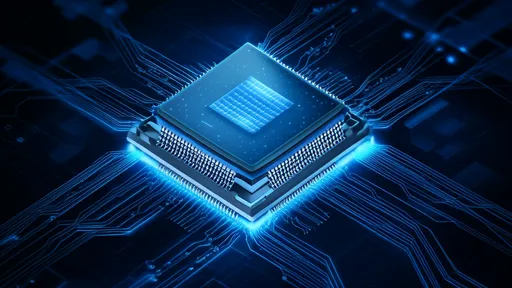
The rapid evolution of enterprise IT infrastructure has ushered in a new era of computational efficiency, with hyperconverged infrastructure (HCI) emerging as a game-changer. Among its most transformative capabilities is GPU scheduling—a feature that is redefining how businesses leverage accelerated computing. By seamlessly integrating GPU resources into a hyperconverged environment, organizations are unlocking unprecedented performance for AI, machine learning, and high-performance computing workloads.
The Rise of GPU Acceleration in Hyperconverged Environments
Traditional data center architectures often struggle with the rigid separation between compute, storage, and networking resources. This siloed approach creates inefficiencies when deploying GPU-accelerated workloads, as GPUs are typically tethered to specific physical servers. Hyperconvergence disrupts this paradigm by abstracting and pooling GPU resources across the entire infrastructure. The result? A dynamic, software-defined approach to GPU allocation that aligns with the fluid demands of modern applications.
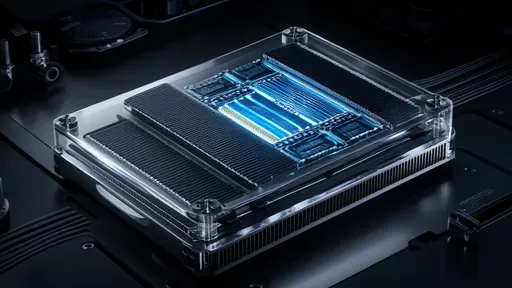
What makes hyperconverged GPU scheduling particularly compelling is its ability to treat GPUs as disaggregated, composable resources. Much like how hyperconvergence revolutionized storage by virtualizing it, GPU scheduling extends this philosophy to acceleration hardware. Administrators can now allocate GPU capacity on-demand, scaling up or down without the constraints of physical server boundaries. This flexibility is proving invaluable for use cases ranging from real-time analytics to generative AI model training.
Intelligent Scheduling: The Brains Behind GPU Utilization
At the heart of effective hyperconverged GPU scheduling lies sophisticated resource orchestration. Modern HCI platforms employ intelligent algorithms that consider multiple factors when assigning GPU resources—workload priority, GPU memory requirements, thermal conditions, and even power consumption patterns. This goes far beyond simple load balancing; it's about contextual optimization of accelerated compute resources.
The scheduling intelligence becomes particularly crucial in multi-tenant environments. By implementing quality-of-service (QoS) controls and fairness algorithms, HCI platforms can prevent "noisy neighbor" scenarios where one workload monopolizes GPU resources. Some advanced systems even incorporate predictive scheduling, using historical usage patterns to preemptively allocate GPUs before demand spikes occur. This proactive approach minimizes latency for time-sensitive operations like autonomous vehicle simulation or medical imaging analysis.
Breaking Through Virtualization Barriers
One of the most significant technical hurdles in GPU scheduling has been virtualization overhead. Traditional GPU passthrough techniques often resulted in performance degradation or limited multi-tenancy capabilities. Contemporary hyperconverged solutions have overcome this through innovations like mediated passthrough and hardware-assisted partitioning. These technologies enable fine-grained sharing of GPU resources while maintaining near-native performance levels.
The implications are profound for cloud service providers and enterprises alike. A single high-end GPU can now be securely partitioned across multiple virtual machines or containers, each receiving guaranteed acceleration resources. This granular control drives up utilization rates while reducing total cost of ownership—a win-win for organizations looking to maximize their infrastructure investments.
The Software Stack: Where the Magic Happens
Underpinning these capabilities is an evolving software ecosystem specifically designed for hyperconverged GPU environments. Container orchestration platforms like Kubernetes have embraced GPU scheduling extensions, while HCI vendors develop specialized drivers and management plugins. This software layer abstracts the underlying hardware complexity, presenting administrators with intuitive interfaces for policy-based GPU allocation.
Perhaps most importantly, these software advancements are making GPU acceleration accessible to a broader range of applications. Through standardized APIs and abstraction layers, even legacy applications can benefit from GPU acceleration without extensive code modifications. This democratization of accelerated computing is accelerating innovation across industries, from financial modeling to digital content creation.
Real-World Impact Across Industries
The practical applications of hyperconverged GPU scheduling are already making waves. In healthcare, radiology departments are processing more scans in less time by dynamically allocating GPU resources across their virtual desktop infrastructure. Automotive manufacturers are running more crash test simulations concurrently by efficiently sharing GPU clusters among engineering teams. Media companies are rendering high-resolution content faster through elastic GPU provisioning that scales with project demands.
These use cases share a common thread—the ability to treat GPU acceleration as a flexible, schedulable resource rather than fixed hardware. This shift in perspective is enabling organizations to achieve what was previously impossible: delivering supercomputing-class performance through infrastructure that's as agile as it is powerful.
Looking Ahead: The Future of Accelerated Hyperconvergence
As we peer into the future of hyperconverged GPU scheduling, several trends are coming into focus. The integration of AI-driven resource management promises to make scheduling even more responsive and efficient. Emerging GPU architectures designed specifically for virtualization will further reduce overhead. Perhaps most exciting is the potential for cross-cluster GPU resource sharing, enabling truly distributed accelerated computing across geographic boundaries.
The ultimate promise of hyperconverged GPU scheduling is simple yet profound: to make accelerated computing as ubiquitous and easy to consume as electricity. As the technology matures and adoption grows, we're moving closer to a world where the immense power of GPU acceleration is available on-demand to any application, anywhere—no specialized hardware configurations required. This isn't just evolution; it's a revolution in how we think about computational power.

By /Aug 15, 2025

By /Aug 26, 2025

By /Aug 15, 2025

By /Aug 15, 2025

By /Aug 15, 2025

By /Aug 15, 2025
By /Aug 26, 2025

By /Aug 15, 2025

By /Aug 26, 2025

By /Aug 15, 2025

By /Aug 26, 2025
By /Aug 15, 2025

By /Aug 15, 2025
By /Aug 15, 2025
By /Aug 15, 2025
By /Aug 15, 2025

By /Aug 15, 2025

By /Aug 15, 2025

By /Aug 26, 2025

By /Aug 15, 2025