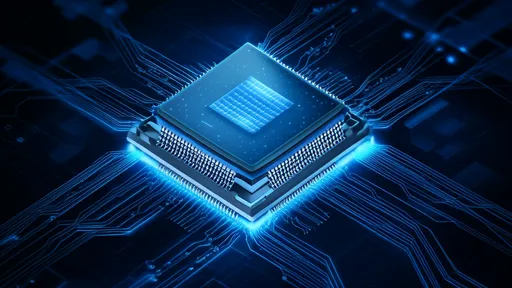
The rapid evolution of high-performance computing and data centers has brought thermal management to the forefront of technological challenges. Among the emerging solutions, co-packaged optics with integrated thermal management stands out as a promising approach to address the escalating heat dissipation demands in next-generation systems. As data rates soar and component densities increase, traditional cooling methods struggle to keep pace, making innovative solutions like photonic-electronic co-packaging with advanced cooling mechanisms critical for sustaining performance and reliability.
At the heart of this challenge lies the fundamental physics of photonic and electronic integration. While optical interconnects offer superior bandwidth and energy efficiency compared to electrical counterparts, they generate localized heat that can degrade both optical and electronic components. The thermal coupling between lasers, modulators, and high-speed electronics in co-packaged designs creates complex thermal profiles that demand sophisticated management strategies. Engineers are now developing multi-physics solutions that combine optical, electrical, and thermal considerations from the initial design phase.
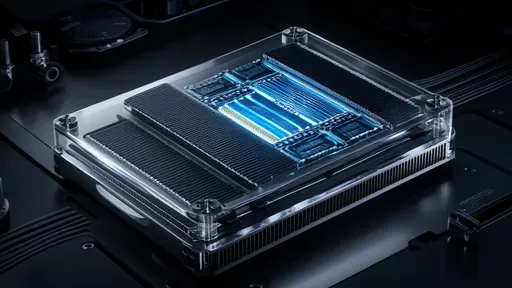
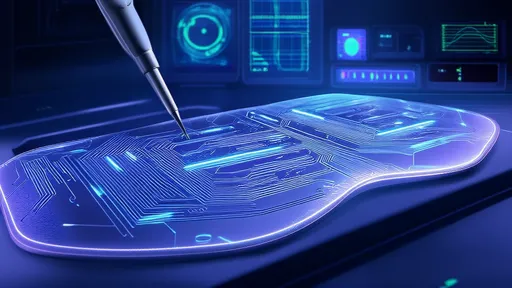
Recent advancements in microfluidic cooling have opened new possibilities for direct integration with photonic packages. Unlike conventional air cooling or remote liquid cooling, embedded microchannels can achieve heat removal rates exceeding 1 kW/cm² while maintaining precise temperature control critical for wavelength stability in optical components. These microscopic cooling structures are being co-designed with optical waveguides to minimize thermal crosstalk and mechanical stress, representing a significant departure from traditional sequential design methodologies.
The materials science behind these integrated cooling solutions is equally groundbreaking. Novel thermally conductive interface materials with anisotropic thermal properties are being developed to preferentially direct heat away from sensitive optical components while maintaining electrical isolation. Researchers are experimenting with diamond-based heat spreaders, graphene-enhanced thermal interface materials, and phase-change composites that can adapt their thermal conductivity based on local temperature conditions. These material innovations are enabling thermal resistances below 0.1 cm²·K/W at the critical junctions between photonic and electronic elements.
System-level thermal management strategies are evolving alongside component technologies. Advanced predictive thermal modeling techniques now incorporate machine learning to anticipate dynamic thermal loads in co-packaged systems. These models account for the varying heat generation patterns of burst-mode optical communications and the transient thermal characteristics of heterogeneous integration. The result is proactive thermal management that can adjust cooling parameters in real-time, preventing thermal runaway while optimizing energy efficiency.
Industry adoption of these advanced cooling techniques is accelerating, driven by the insatiable demand for higher bandwidth in data centers and high-performance computing. Major players in the field are reporting 30-50% improvements in thermal performance compared to conventional approaches, translating directly into higher reliability and longer component lifetimes. As standardization efforts progress for co-packaged optics interfaces, thermal management specifications are becoming an integral part of the design frameworks, ensuring compatibility across vendors and applications.
Looking ahead, the convergence of photonic integration and advanced thermal management is expected to enable previously unimaginable system architectures. The ability to reliably cool 3D stacked photonic-electronic assemblies will likely unlock new paradigms in computing, from optical neural networks to quantum-classical hybrid systems. As research continues to push the boundaries of what's possible in heat removal at the chip scale, co-packaged optics with integrated cooling may well become the foundation for the next generation of high-performance computing infrastructure.
The environmental implications of these developments cannot be overlooked. With data centers already consuming 1-2% of global electricity, the energy efficiency gains from optimized thermal management in co-packaged systems could significantly reduce the carbon footprint of the digital economy. Future innovations may even explore waste heat recovery systems integrated directly into the optical packages, turning a challenge into an opportunity for sustainable computing.

By /Aug 15, 2025

By /Aug 26, 2025

By /Aug 15, 2025

By /Aug 15, 2025

By /Aug 15, 2025

By /Aug 15, 2025
By /Aug 26, 2025

By /Aug 15, 2025

By /Aug 26, 2025

By /Aug 15, 2025

By /Aug 26, 2025
By /Aug 15, 2025
By /Aug 15, 2025
By /Aug 15, 2025
By /Aug 15, 2025
By /Aug 15, 2025

By /Aug 15, 2025

By /Aug 15, 2025

By /Aug 26, 2025

By /Aug 15, 2025