The concept of using DNA as a storage medium has long fascinated scientists and technologists alike. Unlike traditional storage methods, DNA offers unparalleled density and longevity, capable of preserving information for thousands of years under the right conditions. However, one of the most significant challenges in this field has been the ability to randomly access specific data within a DNA storage system. Recent advancements are now bringing us closer to overcoming this hurdle, opening up new possibilities for practical applications.
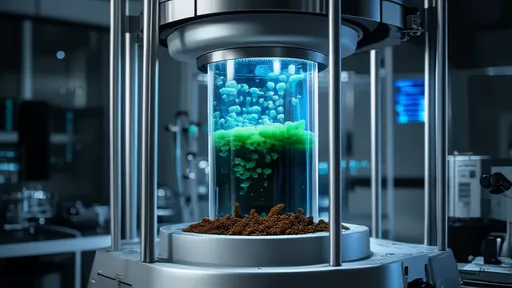
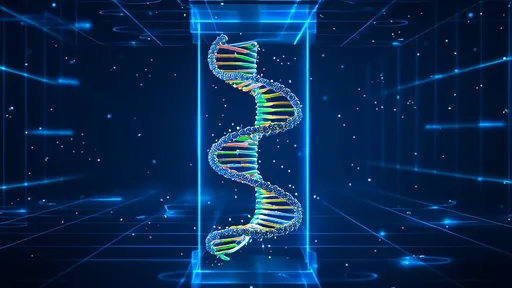
DNA storage operates by encoding digital data into synthetic DNA strands. Each nucleotide—adenine (A), thymine (T), cytosine (C), and guanine (G)—represents binary information, allowing vast amounts of data to be stored in a microscopic space. While writing data to DNA has become increasingly efficient, reading and retrieving specific pieces of information without sequencing the entire DNA pool has remained a complex problem. Traditional sequencing methods are time-consuming and costly, making random access a critical requirement for scalability.
Researchers have been experimenting with various techniques to enable selective retrieval. One promising approach involves the use of unique molecular identifiers (UMIs) or primers that act as bookmarks within the DNA strands. By attaching these markers to specific data segments, scientists can later target and amplify only the desired sequences using polymerase chain reaction (PCR). This method mimics the way a computer retrieves files from a hard drive, skipping irrelevant data and focusing solely on the requested information.
Another breakthrough comes from the integration of CRISPR-Cas systems. Originally known for its gene-editing capabilities, CRISPR has been repurposed to locate and extract specific DNA sequences. By designing guide RNAs that match the target data, researchers can direct the Cas enzyme to cut and isolate the relevant segments. This technique not only improves retrieval accuracy but also reduces the need for full sequencing, making the process faster and more cost-effective.
The implications of random access in DNA storage are profound. Industries dealing with massive datasets, such as genomics, cloud computing, and archival preservation, stand to benefit significantly. Imagine a future where entire libraries of historical records or vast genomic databases are stored in test tubes, with the ability to retrieve any piece of information in seconds. The potential for reducing physical storage space and energy consumption is staggering, especially as the world grapples with the limitations of conventional data centers.
Despite these advancements, challenges remain. Error rates in DNA synthesis and sequencing, though decreasing, still pose risks to data integrity. Additionally, the current cost of DNA storage, while dropping, remains prohibitive for widespread adoption. However, as the technology matures and economies of scale come into play, these barriers are expected to diminish. The convergence of biotechnology and information technology is accelerating, and DNA storage could soon transition from a laboratory curiosity to a mainstream solution.
Beyond technical improvements, ethical and regulatory considerations must also be addressed. Storing sensitive or personal data in DNA raises questions about security and privacy. Unlike digital encryption, which can be updated or modified, DNA-based data is static and difficult to alter once synthesized. Ensuring robust safeguards against unauthorized access or misuse will be crucial as the technology evolves.
The race to perfect DNA storage is far from over, but the progress in random access capabilities marks a pivotal milestone. As researchers refine these techniques, the dream of using DNA as a universal storage medium inches closer to reality. The fusion of biology and computing holds the promise of revolutionizing how we preserve and interact with information, offering a glimpse into a future where data is as enduring as life itself.

By /Aug 15, 2025
By /Aug 26, 2025
By /Aug 15, 2025
By /Aug 15, 2025
By /Aug 15, 2025
By /Aug 15, 2025

By /Aug 26, 2025

By /Aug 15, 2025
By /Aug 26, 2025
By /Aug 15, 2025

By /Aug 26, 2025
By /Aug 15, 2025
By /Aug 15, 2025

By /Aug 15, 2025
By /Aug 15, 2025
By /Aug 15, 2025
By /Aug 15, 2025
By /Aug 15, 2025

By /Aug 26, 2025

By /Aug 15, 2025