The concept of vacuum tube logistics, once relegated to the realm of science fiction, is now inching closer to reality. Among the most promising developments in this field is the magnetic levitation (maglev) capsule system, designed to revolutionize cross-city delivery. By combining the near-frictionless movement of maglev technology with the resistance-free environment of a vacuum tube, these systems promise unprecedented speed and efficiency in transporting goods. The implications for industries ranging from e-commerce to healthcare are staggering, potentially reshaping how we think about logistics in urban environments.
How It Works: The Science Behind the Speed
At the heart of this system lies a simple yet powerful principle: removing air resistance and friction. Traditional transportation methods, whether by road or rail, are limited by these two factors. Even the fastest trains must contend with air drag and mechanical friction, which cap their maximum speeds and energy efficiency. The vacuum tube maglev system eliminates both. By maintaining a low-pressure environment inside the tube, air resistance is reduced to negligible levels. Meanwhile, magnetic levitation allows the capsules to float above the track, eliminating wheel-on-rail friction entirely.
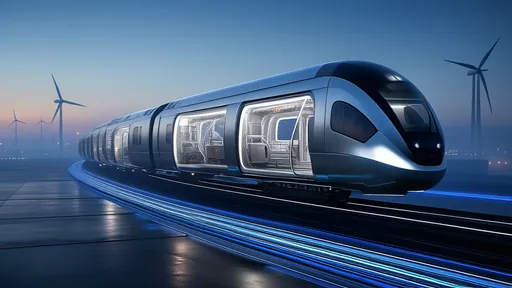
The capsules themselves are marvels of engineering. Measuring roughly the size of a small car, they are designed to carry standardized cargo containers. Powerful electromagnets along the tube's length propel the capsules forward with precise control, while superconducting magnets onboard ensure stable levitation. The result is a system capable of sustaining speeds exceeding 600 mph (965 km/h) – faster than most commercial aircraft – with minimal energy consumption compared to traditional transport methods.
From Concept to Reality: Current Implementations
While full-scale implementations remain in development, several pilot projects have demonstrated the technology's viability. In China, a prototype system has successfully transported goods between distribution centers at speeds surpassing 400 mph. Meanwhile, European and North American companies are exploring smaller-scale applications, particularly for high-value, time-sensitive deliveries like medical supplies and electronics components.
One particularly promising test case involves organ transport for transplant surgeries. Current methods relying on chartered aircraft and ground ambulances face numerous uncertainties – weather delays, traffic congestion, and strict temperature control requirements. A vacuum tube system could reliably deliver organs across hundreds of miles in under an hour, with perfect environmental control throughout the journey. Early simulations suggest such a system could improve transplant success rates significantly by reducing organ ischemia time.
The Business Case: Why Companies Are Investing
The economic incentives driving development are compelling. Traditional last-mile delivery accounts for an astonishing 53% of total shipping costs. Fuel, labor, vehicle maintenance, and infrastructure wear all contribute to this massive expense. While the upfront costs of vacuum tube infrastructure are substantial, the long-term savings could be transformative. Estimates suggest operational costs per mile could be 60-70% lower than current truck-based delivery systems once implemented at scale.
E-commerce giants are particularly interested in the technology's potential to enable same-hour delivery across metropolitan areas. Imagine ordering a smartphone in Boston and having it arrive at your Manhattan doorstep within 90 minutes – without expensive air freight. This level of service could redefine customer expectations and create new market opportunities across multiple industries.
Engineering Challenges and Solutions
Of course, significant hurdles remain before widespread adoption becomes feasible. Maintaining vacuum conditions across hundreds of miles of tubing presents substantial engineering challenges. Even minor leaks could dramatically increase energy consumption as systems work to maintain low pressure. Current designs address this through segmented tubes with automated isolation valves that can seal off compromised sections without disrupting entire networks.
Thermal expansion is another critical consideration. Metal tubes expand and contract with temperature changes, potentially causing misalignments that could disrupt maglev operations. Engineers are experimenting with advanced composite materials that exhibit minimal thermal expansion, along with flexible joints that can accommodate movement while maintaining vacuum seals.
Urban Integration: Above or Below Ground?
A major debate among urban planners centers on placement. Underground tunnels offer protection from weather and minimize land use conflicts, but excavation costs are prohibitive in many areas. Elevated tubes present their own challenges, requiring extensive right-of-way negotiations and potentially facing public resistance over aesthetic concerns. Some proposals suggest repurposing existing transportation corridors, such as running tubes along highway medians or above railway lines.
Interestingly, the same tunneling technologies being developed for hyperloop passenger systems could be adapted for freight applications. Boring machines capable of excavating tunnels rapidly and cost-effectively could make underground networks more feasible, especially in dense urban cores where surface space is limited.
Safety and Reliability Considerations
Any transportation system moving at 600 mph must prioritize safety. Redundant braking systems, including both electromagnetic and physical failsafes, are being developed to ensure capsule deceleration in emergencies. Network control systems would maintain safe spacing between capsules with millimeter precision, far exceeding current air traffic control standards.
Perhaps counterintuitively, vacuum environments actually enhance safety in some respects. With no oxygen present, fire risks are eliminated – a significant advantage when transporting flammable goods. The sealed tubes also protect cargo from weather, theft, and accidental damage during transit.
Environmental Impact and Sustainability
The sustainability case for vacuum tube logistics is compelling. Electric-powered and producing zero direct emissions, these systems could significantly reduce the carbon footprint of freight transportation. Preliminary analyses suggest they could move cargo with 90% less energy per ton-mile than diesel trucks. When powered by renewable energy sources, the environmental benefits become even more pronounced.
Noise pollution reduction represents another often-overlooked advantage. Unlike trucks, trains, or aircraft, maglev capsules in vacuum tubes would operate in near silence, eliminating a major quality-of-life issue associated with current logistics infrastructure near populated areas.
The Road Ahead: Timeline and Adoption
Industry experts predict a phased rollout beginning in the late 2020s. Initial implementations will likely connect specific high-value corridors, such as between major airports and urban centers or between manufacturing hubs and ports. As the technology matures and costs decrease, networks could expand to connect entire regions.
Regulatory frameworks will need to evolve alongside the technology. New standards for vacuum system safety, electromagnetic interference, and right-of-way usage must be developed. International cooperation will be crucial, as the greatest benefits will come from interconnected transnational networks.
The vision of vacuum tube maglev delivery systems represents more than just a faster way to move packages. It promises to fundamentally alter our relationship with physical goods, enabling unprecedented speed and reliability in logistics while addressing critical environmental challenges. As the technology continues to develop, it may well usher in a new era of sustainable, ultra-efficient transportation – one capsule at a time.

By /Jul 28, 2025
By /Jul 28, 2025

By /Jul 28, 2025

By /Jul 28, 2025

By /Jul 28, 2025

By /Jul 28, 2025

By /Jul 28, 2025

By /Jul 28, 2025

By /Jul 28, 2025
By /Jul 28, 2025
By /Jul 28, 2025
By /Jul 28, 2025

By /Jul 28, 2025

By /Jul 28, 2025

By /Jul 28, 2025

By /Jul 28, 2025

By /Jul 28, 2025

By /Jul 28, 2025

By /Jul 28, 2025

By /Jul 28, 2025