For decades, scientists have marveled at the extraordinary navigational abilities of migratory birds. These feathered travelers embark on epic journeys spanning thousands of miles, often crossing continents and oceans with pinpoint accuracy. While celestial cues and landmarks play a role, one of nature's most fascinating secrets lies in their ability to perceive Earth's magnetic field – a biological compass rooted in quantum physics and a light-sensitive protein called cryptochrome.
The discovery of cryptochromes in avian retinas revolutionized our understanding of magnetoreception. These specialized proteins, also found in plants and insects, exhibit unique quantum behavior when exposed to blue light. Researchers now believe that cryptochromes act as molecular sensors, translating magnetic information into neural signals that guide birds across vast distances. This quantum-assisted navigation system operates at a scale so precise that it puts human-made GPS technology to shame.
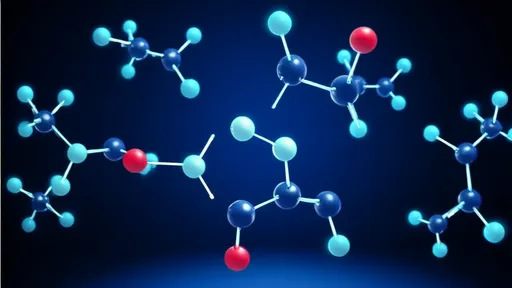
How does this biological quantum compass work? When light hits cryptochrome molecules in a bird's eye, it triggers the formation of radical pairs – molecules with unpaired electrons. These electron pairs exist in a delicate quantum state called entanglement, where their spins become correlated. Earth's magnetic field subtly influences the spin states of these entangled electrons, altering the chemical products formed in the photoreceptor cells. The bird's visual system interprets these minute changes as patterns of light or darkness superimposed on its normal vision, creating a magnetic map visible only to the migrating creature.
The implications of this discovery extend far beyond ornithology. Quantum biologists suggest that similar mechanisms might exist in other species, from sea turtles to butterflies. The cryptochrome proteins in migratory birds demonstrate how nature has harnessed quantum effects at warm temperatures – a phenomenon that physicists once believed could only occur in carefully controlled laboratory conditions. This challenges our fundamental understanding of where quantum physics ends and classical biology begins.
Recent experiments with European robins have provided compelling evidence for the cryptochrome hypothesis. When researchers disrupted the birds' cryptochrome proteins or applied oscillating magnetic fields that interfere with quantum coherence, the robins lost their navigational abilities. Conversely, birds with intact cryptochrome systems could recalibrate their internal compasses after magnetic displacements, suggesting an astonishingly flexible quantum sensor.
The study of avian magnetoreception has sparked interdisciplinary collaborations between physicists, chemists, and biologists. Some teams are investigating whether artificial systems could mimic nature's quantum compass for navigation without satellites. Others explore potential applications in quantum computing, where maintaining coherence (the fragile quantum state) at room temperature remains a significant challenge. Birds appear to have solved this problem through millions of years of evolution, protecting their quantum states from environmental noise through sophisticated molecular architectures.
As research continues, scientists are uncovering more nuances in this quantum biological system. The orientation of cryptochrome molecules within retinal cells, their interaction with other proteins, and the neural pathways processing magnetic information all contribute to the remarkable precision of avian navigation. Some species may even combine multiple magnetoreception strategies, using both cryptochrome-based and magnetite-based systems for different aspects of their journeys.
This emerging field raises profound questions about consciousness and perception. The birds' quantum-assisted vision suggests they experience the world in ways fundamentally different from humans – perceiving electromagnetic fields as visual patterns. It challenges our anthropocentric views of reality and demonstrates how evolution has crafted diverse sensory worlds across species.
Future research may reveal whether human cells retain any remnant of this quantum sensitivity. While we've lost the capacity for magnetic navigation (if our ancestors ever possessed it), cryptochrome proteins still exist in our eyes, regulating circadian rhythms. Understanding how birds maintain quantum coherence in biological systems could lead to breakthroughs in medicine, materials science, and quantum technology.
The humble migratory bird, through its retinal quantum compass, has become an unexpected teacher in both biology and physics. As we decode nature's solutions to complex problems, we're reminded that some of the most advanced technologies already exist in the living world – we just need to observe and learn.
By /Jul 28, 2025

By /Jul 28, 2025
By /Jul 28, 2025
By /Jul 28, 2025
By /Jul 28, 2025
By /Jul 28, 2025
By /Jul 28, 2025

By /Jul 28, 2025
By /Jul 28, 2025
By /Jul 28, 2025

By /Jul 28, 2025

By /Jul 28, 2025

By /Jul 28, 2025
By /Jul 28, 2025

By /Jul 28, 2025
By /Jul 28, 2025
By /Jul 28, 2025

By /Jul 28, 2025

By /Jul 28, 2025
By /Jul 28, 2025