Single-Molecule Movie Machine: Chemical Bond Observation with Femtosecond X-Ray Lasers

Jul 28, 2025 By

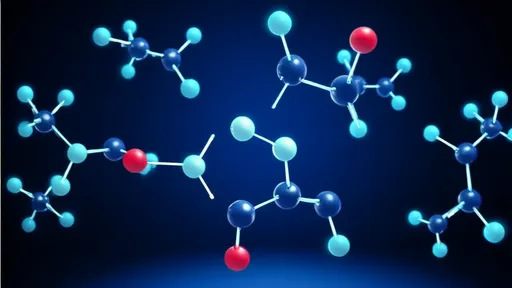
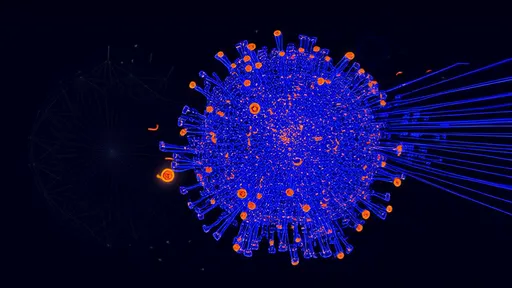
In the realm of molecular science, the ability to observe chemical bonds forming and breaking in real-time has long been a holy grail. Recent breakthroughs in femtosecond X-ray laser technology have brought this dream closer to reality, enabling researchers to capture the intricate dance of atoms with unprecedented clarity. This cutting-edge technique, often referred to as the "single-molecule movie camera," is revolutionizing our understanding of chemical reactions at their most fundamental level.

The concept hinges on the use of ultra-short X-ray pulses, each lasting mere femtoseconds (quadrillionths of a second). These bursts of light are brief enough to freeze the motion of atoms mid-reaction, allowing scientists to construct detailed frame-by-frame sequences of molecular transformations. Unlike conventional methods that average out behavior across countless molecules, this approach captures the behavior of individual molecules, providing insights that were previously unimaginable.

What makes this technology truly groundbreaking is its ability to probe the very essence of chemical bonds. When atoms interact to form molecules, the process occurs on timescales far too rapid for traditional observation techniques. Femtosecond X-ray lasers overcome this limitation by delivering pulses so short that they can effectively photograph the positions of atoms before significant movement occurs. The resulting "molecular movies" reveal not just static structures, but the dynamic evolution of chemical systems.

The implications for chemistry and related fields are profound. For decades, scientists have relied on theoretical models to predict how reactions proceed. While these models have been remarkably successful, direct experimental verification at the atomic scale has remained elusive. With femtosecond X-ray lasers, researchers can now test these theories against actual observations, potentially leading to revisions in our fundamental understanding of chemical kinetics and reaction mechanisms.

One particularly exciting application lies in the study of enzyme catalysis. Enzymes are nature's molecular machines, accelerating biochemical reactions by factors of millions. How they achieve this remarkable feat at the atomic level has been a subject of intense debate. The single-molecule movie approach allows scientists to watch enzymes in action, tracking the subtle rearrangements of atoms that enable their extraordinary catalytic power. Such insights could inspire the design of artificial catalysts with similar efficiency.

The technology also promises to transform materials science. Many important material properties - from conductivity to strength - depend on how atoms are arranged and bonded. By observing these bonds form and break under different conditions, researchers can engineer materials with precisely tailored characteristics. This capability could lead to breakthroughs in everything from energy storage to quantum computing.

Developing this capability required overcoming significant technical challenges. Creating X-ray pulses of sufficient intensity and brevity demanded advances in laser physics and accelerator technology. Similarly, detecting the faint signals from single molecules necessitated the development of extremely sensitive detectors. Perhaps most crucially, researchers had to devise methods to precisely synchronize the X-ray pulses with the initiation of chemical reactions.

The experimental setup typically involves initiating reactions with optical laser pulses, then probing them with precisely timed X-ray pulses. This pump-probe technique, repeated with varying delays between the pulses, builds up a sequence of snapshots that can be assembled into a coherent movie of the reaction. The approach has been successfully applied to systems ranging from simple diatomic molecules to complex biomolecules.

Looking ahead, scientists anticipate even more dramatic advances as the technology matures. Future developments may allow for higher resolution imaging, capturing not just atomic positions but the movement of electrons during reactions. This could provide unprecedented insights into electron transfer processes that underpin phenomena from photosynthesis to battery operation. Additionally, combining these techniques with advanced computational methods promises to create a powerful feedback loop between theory and experiment.

While the technology is still in its relative infancy, early results have already challenged some long-held assumptions about chemical reactivity. Certain reactions appear to proceed through intermediate states that were previously undetectable, while others follow pathways quite different from theoretical predictions. As more systems are studied, we may need to revise our basic understanding of how molecules interact and transform.

The societal implications of this research are potentially enormous. From developing more efficient solar cells to designing new pharmaceuticals, the ability to observe and understand chemical processes at this fundamental level could accelerate innovation across numerous fields. In drug design, for instance, watching how potential medications interact with their targets at the atomic scale could streamline the development process and lead to more effective treatments.

As with any transformative technology, challenges remain. The facilities required for these experiments are currently large and expensive, limiting widespread access. Researchers are working to develop more compact and affordable systems, but significant engineering hurdles persist. Additionally, interpreting the complex data generated by these experiments requires sophisticated computational tools and theoretical frameworks.

Despite these challenges, the future looks bright for single-molecule movie technology. As the methods continue to improve and become more accessible, we can expect a flood of new discoveries about the molecular world. What was once the realm of theory and indirect inference is now becoming directly observable, opening new frontiers in our understanding of matter and its transformations.

The development of femtosecond X-ray lasers for chemical imaging represents a remarkable convergence of physics, chemistry, and engineering. It stands as a testament to human ingenuity and our relentless pursuit of knowledge at the smallest scales. As this technology continues to evolve, it promises to reveal the hidden choreography of atoms and molecules, fundamentally changing how we understand and manipulate the molecular building blocks of our world.
Recommend Posts
Science

World's First Biomolecular Data Center: DNA Storage Cloud

By /Jul 28, 2025

The world of data storage is undergoing a revolutionary transformation, moving from silicon to biology. In a groundbreaking development, scientists have successfully created the first operational biological molecular data center, utilizing DNA as its primary storage medium. This unprecedented achievement marks a pivotal moment in the history of information technology, potentially solving some of our most pressing data storage challenges while opening doors to entirely new possibilities.
Science

Vacuum Pipeline Logistics: High-Speed Cross-City Delivery System with Maglev Capsules

By /Jul 28, 2025

The concept of vacuum tube logistics, once relegated to the realm of science fiction, is now inching closer to reality. Among the most promising developments in this field is the magnetic levitation (maglev) capsule system, designed to revolutionize cross-city delivery. By combining the near-frictionless movement of maglev technology with the resistance-free environment of a vacuum tube, these systems promise unprecedented speed and efficiency in transporting goods. The implications for industries ranging from e-commerce to healthcare are staggering, potentially reshaping how we think about logistics in urban environments.
Science

Migratory Birds Quantum Navigation: Retinal Cryptochrome Magnetic Sensing

By /Jul 28, 2025

For decades, scientists have marveled at the extraordinary navigational abilities of migratory birds. These feathered travelers embark on epic journeys spanning thousands of miles, often crossing continents and oceans with pinpoint accuracy. While celestial cues and landmarks play a role, one of nature's most fascinating secrets lies in their ability to perceive Earth's magnetic field – a biological compass rooted in quantum physics and a light-sensitive protein called cryptochrome.
Science

Mechanism of Cancer Metastasis Guided by Tissue Stiffness in Atomic Force Microscopy

By /Jul 28, 2025

In the evolving landscape of cancer research, scientists are increasingly turning their attention to the mechanical properties of tissues as a critical factor in metastasis. Recent studies utilizing cellular force spectroscopy have uncovered compelling evidence that tissue stiffness plays a pivotal role in guiding cancer cell migration and invasion. This discovery challenges traditional views of metastasis as a purely biochemical process, highlighting how physical forces within the tumor microenvironment can dictate the spread of malignant cells.
Science

Acoustic Archaeological Restoration: Decoding the Frequency of Double-Tone Structure in Bronze Bells

By /Jul 28, 2025

The ancient Chinese bianzhong, or bronze chime bells, represent one of the most sophisticated musical instruments of antiquity. Their dual-tone structure—a single bell producing two distinct pitches—has long fascinated historians, archaeologists, and acousticians alike. Recent advancements in acoustic archaeology have allowed researchers to decode the frequency patterns embedded in these ancient artifacts, shedding light on the remarkable engineering prowess of early Chinese metallurgists and musicians.
Science

The Enigma of Dinosaur Body Temperature: Isotopic Evidence from Fossils Reveals Warm-Blooded Traits

By /Jul 28, 2025

The long-standing debate over whether dinosaurs were cold-blooded like modern reptiles or warm-blooded like mammals has taken a dramatic turn. Recent breakthroughs in analyzing fossilized isotopes are shedding new light on this mystery, challenging decades of paleontological assumptions. These findings could fundamentally rewrite our understanding of dinosaur physiology and their dominance during the Mesozoic era.
Science

Viral Capsid Dynamics: Deformation Codes Revealed by Cryo-Electron Microscopy

By /Jul 28, 2025

The intricate dance of viral capsid proteins has long fascinated structural biologists, yet its dynamic choreography remained largely cryptic until cryo-electron microscopy (cryo-EM) began capturing these nanoscale movements in unprecedented detail. Recent breakthroughs in high-resolution cryo-EM have peeled back the curtain on how viral shells breathe, twist, and warp during critical stages of infection – revealing a hidden language of conformational changes that govern viral replication and immune evasion.
Science

Neanderthal Diet: Dental Calculus Starch Granules' Prehistoric Menu

By /Jul 28, 2025

The study of ancient diets has always been a fascinating window into our ancestors' lives, offering clues about their health, environment, and daily struggles. Among the most intriguing discoveries in recent years is the analysis of starch grains trapped in Neanderthal dental calculus, revealing a surprisingly complex and varied diet that challenges long-held assumptions about these prehistoric humans.
Science

Single-Molecule Movie Machine: Chemical Bond Observation with Femtosecond X-Ray Lasers

By /Jul 28, 2025

In the realm of molecular science, the ability to observe chemical bonds forming and breaking in real-time has long been a holy grail. Recent breakthroughs in femtosecond X-ray laser technology have brought this dream closer to reality, enabling researchers to capture the intricate dance of atoms with unprecedented clarity. This cutting-edge technique, often referred to as the "single-molecule movie camera," is revolutionizing our understanding of chemical reactions at their most fundamental level.
Science

Stratospheric Microbiome: Study of Gene Drift at 20 Kilometers Altitude

By /Jul 28, 2025

At an altitude of 20 kilometers, where the air thins and temperatures plummet, scientists have uncovered a thriving microbial ecosystem that challenges our understanding of life's boundaries. The stratospheric microbiome, a dynamic community of bacteria, fungi, and viruses, is rewriting textbooks on atmospheric biology while raising profound questions about global gene flow.
Science

Autonomous Icebreaker: Real-time Ice Navigation for Arctic Routes with AI

By /Jul 28, 2025

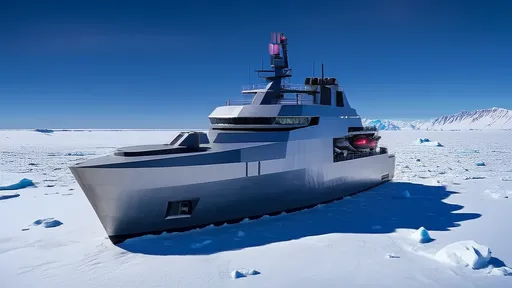
The Arctic, once a frozen frontier impenetrable to most vessels, is now opening up due to the accelerating effects of climate change. As ice melts at an unprecedented rate, new shipping routes are emerging, promising to cut transit times between Asia, Europe, and North America by thousands of nautical miles. However, navigating these treacherous waters remains a formidable challenge. Enter the era of autonomous icebreakers equipped with AI-driven real-time ice navigation systems—a technological leap that could revolutionize Arctic shipping.
Science

Ammonia-Fueled Cargo Ships: A Chemical Hydrogen Storage Solution for Zero-Carbon Shipping

By /Jul 28, 2025

The maritime industry, long criticized for its heavy reliance on fossil fuels, is undergoing a quiet revolution as ammonia emerges as a frontrunner in the race toward zero-carbon shipping. Unlike battery-powered vessels or hydrogen fuel cells—which face limitations in energy density and infrastructure—ammonia offers a chemically stable method of storing hydrogen that aligns with existing logistics networks. The recent launch of the world's first ammonia-fueled cargo ships marks a pivotal moment, signaling that the era of carbon-intensive bunker fuel may finally be approaching its sunset.
Science

Urban Sky Corridors: A Three-Dimensional Traffic Network for Drone Cargo

By /Jul 28, 2025

The concept of urban aerial corridors is no longer confined to the realm of science fiction. As cities grow denser and ground transportation becomes increasingly congested, the idea of a three-dimensional traffic network for drone-based cargo delivery is gaining traction. This innovative approach promises to revolutionize logistics, offering a faster, more efficient way to move goods through crowded urban landscapes.
Science

Quantum Dot Neurotracing: Real-Time Imaging of Dopamine Release

By /Jul 28, 2025

For decades, neuroscientists have sought ways to visualize the fleeting dance of neurotransmitters in the living brain. The recent convergence of nanotechnology and neurobiology has birthed a revolutionary approach—quantum dot-based tracking of dopamine release. This technique isn't just another imaging tool; it's a paradigm shift in how we observe the brain's chemical conversations at nanometer scales.
Science

Anesthesia in the Stone Age: Pain-Relieving Plants for Primitive Cranial Surgery

By /Jul 28, 2025

Long before modern medicine developed sophisticated anesthetics, our ancestors performed intricate surgical procedures—including trepanation, the drilling or scraping of holes into the human skull. Evidence of these operations dates back thousands of years, with skulls bearing signs of healing suggesting that many patients survived the ordeal. But how did Stone Age surgeons manage to alleviate the unbearable pain of such invasive procedures? The answer may lie in the forgotten botanical knowledge of prehistoric peoples.
Science

Epidemiological Model of Mathematics: Forecasting the Spread on Social Network Topology

By /Jul 28, 2025

The intersection of mathematics and epidemiology has given rise to powerful tools for understanding how diseases spread through populations. Among these, mathematical models that incorporate social network topology have emerged as particularly insightful for predicting transmission patterns. Unlike traditional compartmental models that assume homogeneous mixing, network-based approaches recognize the inherent structure of human interactions—some individuals are more connected than others, and these connections form complex webs that shape outbreak dynamics.
Science

Asteroid Amino Acids: Chiral Bias of Extraterrestrial Life Precursors

By /Jul 28, 2025

The discovery of amino acids in meteorites has long tantalized scientists with the possibility that the building blocks of life may have extraterrestrial origins. Among the most intriguing aspects of these findings is the observed chiral bias in these organic molecules—a phenomenon that could hold clues to the emergence of life beyond Earth. Unlike the racemic mixtures typically produced in abiotic synthesis, certain meteoritic amino acids exhibit a slight excess of one enantiomer over the other, mirroring the homochirality essential to life as we know it.
Science

Microplastics in Ice Cores: Pre-Industrial Pollution Benchmarks

By /Jul 28, 2025

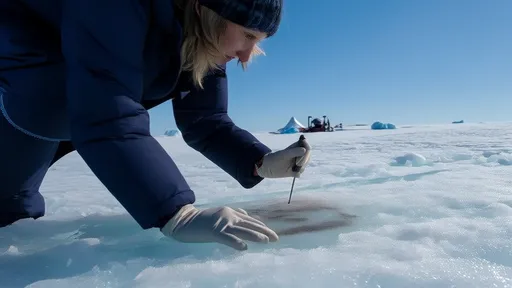
The discovery of microplastics in ancient ice cores has fundamentally altered our understanding of pre-industrial pollution. For decades, scientists assumed that plastic contamination was a purely modern phenomenon, a byproduct of post-1950s mass production. Yet recent analyses of ice layers dating back to the 18th century reveal faint but undeniable traces of synthetic polymers. These findings force us to reconsider not just the timeline of anthropogenic impact, but the very definition of "pristine" environments.
Science

Neuromorphic Chips: Hardware Simulation of Synaptic Plasticity

By /Jul 28, 2025

The field of neuromorphic computing has taken a significant leap forward with recent advancements in hardware-based emulation of synaptic plasticity. Inspired by the human brain's ability to adapt and learn, researchers are developing chips that replicate the dynamic behavior of biological synapses. These innovations promise to revolutionize artificial intelligence by enabling energy-efficient, real-time learning in hardware.
Science

Amber Ancient Pollen Library: Reconstructing the DNA of Eocene Forests

By /Jul 28, 2025

In a groundbreaking scientific endeavor, researchers have turned to an unexpected source to unlock the secrets of ancient ecosystems: microscopic pollen grains preserved in amber. The newly developed Eocene Pollen DNA Project has successfully extracted and sequenced plant DNA from 45-million-year-old fossilized tree resin, offering an unprecedented window into the composition of prehistoric forests. This remarkable achievement challenges long-held assumptions about the limits of DNA preservation while providing botanists with their first genetic blueprint of an entire vanished ecosystem.